
Fiat Culture
Trade-offs and Peace in the Valley

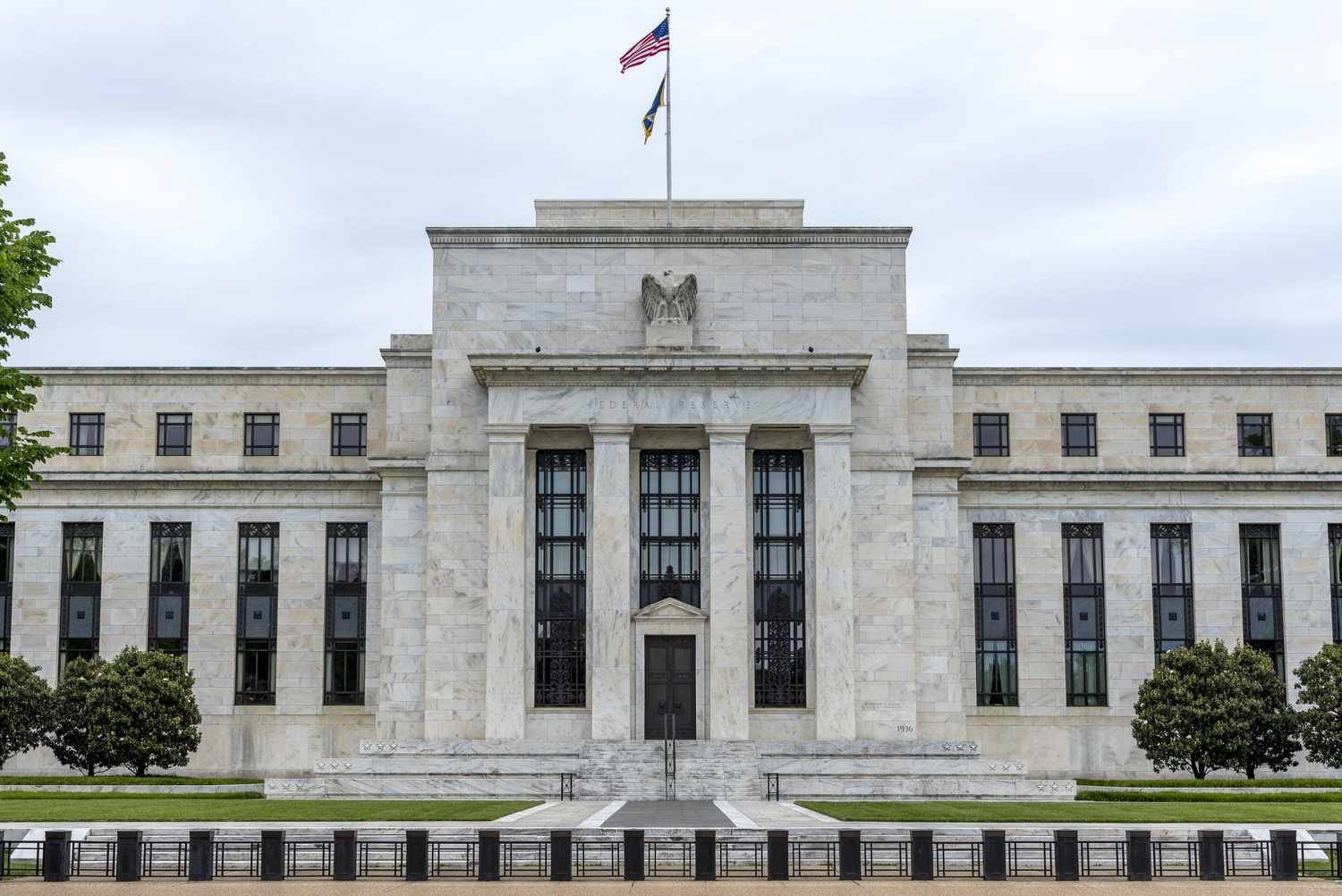
United States Federal Reserve Building in Washington DC
As Thomas Sowell famously noted: “There are no solutions, there are only trade-offs.” This is likely why there is no tranquility to be found in the public sphere. The false trade-off for unanimity is suppression and cancellation. Real trade-offs are forged in disagreement and strife. And perhaps it is to be expected that a current culture, which worships change with ‘unity,’ will discourage taking stock, and that the downsides (trade-offs) will pile up. The lemons will out weigh the lemonade.
The Progressive period of US history, running from the beginnings of the twentieth century until the present, has been inflationary both fiscally and culturally. I believe that this is not by coincidence. Inflation is naturally disruptive, demanding society adopt an increasing rate of change for survival. “A crisis is a terrible thing to waste” said Paul Romer, Stanford economist. And this reality “encourages leaders and individuals to leverage the urgency and disruption of a crisis to implement” change. (Google) Inflation at a low level is a smoldering problem; at a high level it is a full blown crisis, which like an earthquake sends tremors felt throughout society. I personally believe that the impetus to conduct an inflationary fiscal policy, from the early 1900s on, has been to assist Progressive policy ends.
The deflationary Gilded Age Period of American life just prior to the advent to the Progressive-inflationary era marked “the greatest period of rising prosperity recorded in any nation in the whole history of mankind.” (see Jeffery Tucker quote to follow). Pulling within the traces of reality produces real gains (wealth). Ironically, nothing would seem to unshackle us from reality like wealth.
Concomitant with the advent of the Progressive Era and constant inflation has been the birth of Women’s Rights. Whereas before a man could stash his cash under his mattress and leave it there to grow in value and he could go off to work secure in the knowledge that his home life was being capably managed by his wife—inflation determined that the man had to study investments and place his bet in the game of high finance, while his domestic bliss splintered as the wife also left for work in order to make ends meet.
A scholar charting the growth of Women’s political and cultural demands and successes would note that they parallel the shrinkage (depreciation) in the value of our dollar. It’s rather like the situation of the newly minted husband loving his new comforts but shrinking from the couple’s monthly credit statement. This would seem a reasonable effect. Women value needs over cost. And their nature is to be attracted to the novel, fashionable, and to chase change while disliking open conflict. They tend towards the unanimity of pleasantry. And with their increased presence in national affairs they have no doubt leveraged the culture and politics likewise, stifling debate with ‘mom’ nostrums, and encouraging debt by prioritizing social needs. A woman’s proclivities are inflationary, but has their political influence produced inflation, or has climbing inflation grown the women’s movement, or both, or are they even related? “Correlation does not imply causation”, but it sure is hard not to notice.
Progressives also denigrate the legitimacy of Conservative traditional economics. with as much smug dismissal as they do Conservative culture. For example, the following is a bit of a Jeffrey Tucker opinion piece in the Epoch Times, “Why This Fear of Deflation?”
Broadening this out a bit, the purchasing power of the dollar actually gained 66 percent between 1920 and 1933. This was a welcome relief following the 50 percent decline that hit soon after the Federal Reserve was created in 1913. (Author’s note: The women’s suffrage 19th amendment was passed in 1920.)
Imagine sticking dollars in your mattress. You decide to check on them 13 years later. You discover that they have gained in value, without using a bank to pay interest or otherwise investing. You have saved money and made money at the same time. This is absolutely glorious for the public.
It was a one-time thing, sorry to report. It never happened again. After 1933, the valuation of the dollar began to fall because inflation returned. Incredibly, this was the intended policy outcome. The monetary elites intended to create inflation.
Why did they do this? Because the prevailing economic theory at the time preached that the reason for the decline in business activity was the deflation itself. Somehow they decided that the way to fix the problem was to make goods and services more expensive for consumers and businesses.
This was of course the prevailing Keynesian theory. It rejected all historical experience. A mild deflation had characterized the Gilded Age, the greatest period of rising prosperity recorded in any nation in the whole history of mankind. It was only a few decades in the rearview mirror.
Ironically both monetary policy and cultural policy seem to have hatched an opposing ideology from the origins of the great wealth which created it. Quantifying monetary expansion is doable with tables and figures. However quantifying cultural expansion must be empirical in nature. Nevertheless, as I’ve noted, it has struck me how much the machinery of economics and culture have mirrored each other within my lifetime.
For example, just as Nixon was going off the ‘gold standard’ fiscally, the nation was also going off the traditionally Christian gold standard culturally and inflating with the air of liberalization in all areas. Christianity was diluted and compromised specifically.
New Age spirituality is just one fractal of what our common religion had been prior. Its spiritual nutrition has been replaced by fast food-like cultural sweeteners, additives and synthetic preservatives, all moderated by spiritual gurus. Media has increased its scalability.
Cultural life is now much less a path to be walked along the straight and narrow with Christian resolution. Sin has become nonexistent under the Progressives and yet, at the same time, something to be understood through therapy and the care of mental professionals rather than avoided. In short, whereas Christians believed in a Devil, and warn against trying to “beat the Devil” Progressives don’t—and yet they do, much like they lean both ways regarding your sexual identity. Progressives don’t believe in the devil; nevertheless they believe that we can beat him with the help of a licensed counselor. The life of a Progressive is seemingly bipolar (reverent about their imagined future, while depressed in the present) and takes place in a gray liability zone, where things are—while they aren’t. Like a lawyer with a guilty client, who will cast their argument in a gray area of the law, so do Progressives who don’t recognize sin, nevertheless will allow it great leeway.
Life in our New Age is an intellectual re-imagining of existence. The mess born reminds me a bit or how the family trees of Americans have taken off in multiple marriages and step-kids, half-bothers, half-sisters, etc,, within the past couple generations in arrangements unsettled as a game of pick-up sticks. (Where the goal is divorce through removal of the husband without taking the whole structure down.)
Currently, the nature of our morals is judged by the media, celebrities, and pundits, and no longer the biblical word. Cultural value is pulled from the air, then tracked by audience metrics much like stocks, carbon offsets, or past medieval indulgences (which I’m sure had their own economy). Then, if you pick your morals like stocks, it is important you follow the market closely, as we live in inflationary times and staying put is like leaving your feet in the running blocks. I could buy about 25% more five years ago roughly than I can now with the same amount of money. And it used to be that I could feel that I am a good person and not racist if I tried to treat each individual I met with respect and judged them on their merit. Now I’m judged poorly because I just judged them. Also I’m racist because of my skin color (white) and/or wealth (comfortable), but perhaps 25% less racist if I will apologize for either. Points are given for backing reparations. Original Sin still exists but its birth has shifted from a bitten apple from the mythical Tree of Knowledge to skin color. Progressives believe other people and outside forces define your morality. You haven’t much control over it. (Much easier than following the Ten Commandments.) And on the financial side, the value of our money is now dependent upon how much money the government decides to print. (Much easier than digging gold from the ground.) And the Fed (our fiduciary institution independent of the citizenry) will decide how much. Note that ‘fiduciary” is defined “as involving trust, especially with regard to the relationship between a trustee and a beneficiary “ (Oxford Dictionary) Then note that the Fed is a particularly Progressive conflict-avoiding institution as it is a trustee to a beneficiary (the citizenry) which has no say. This is Progressive harmony.
The progressive mentality is inflationary by its nature. It inflates whatever it touches. It inflates egos. Men believe they can manage things better than God. It inflates money, and inverts the normal. Debt is seen as a good thing as it drives investment. And the Progressive cultural inversion of natural law threatens us, just as inflation is wiping out our wealth. Under Biden’s progressive administration the expansion of government regulations and national debt was being driven into the future like that manic Toad of Toad’s Hall from Wind in the Willows, while the unspoken ‘trade-offs’ collected like speeding tickets.
In response, common sense investors and citizenry have both been searching frantically for a safe haven from all this disorienting financial and cultural chop; towards a gold standard in both venues. Money is flooding into gold and Bitcoin. Young males are avoiding young women while bedeviled by AWFL overlords both in the professions and business. Meanwhile married couples with families are moving into private schools, homeschooling, rural living, self-sustaining communities, remote lifestyles, free lance work, re-connecting with their religion, and moving in large numbers to the ‘red’ states.
My wife would opine that the people in her red state of origin were backward and that nothing ever happened in the small rural river town which she had escaped. However, after moving back to be by her aging parents, (and incidentally escaping Seattle), we’re finding it’s not the dull people who create and drive our problems. (Or as Thomas Sowell noted: “In every disaster throughout American history, there always seems to be a man from Harvard in the middle of it.”) The dull people generally motor along, generation after generation, like an old, reliable slant six and are pleasant, polite, and predictable to be around. They have simple joys, simple needs, and simple demands. To wit: be polite, work and support yourself, and practice charity but mind your own business. This is a simple recipe, easy to try at home.
On the other hand, banning the possession of gold, leading to fiat money, roughly parallels the growing liberalism in the public arena, and urban populations in particular. In 1933 Roosevelt banned privately held gold through Executive Order 6102. It was an attempt to pump more money into the money supply by taking “the U.S. off the domestic gold standard, with the government later raising the official price of gold to $35 per ounce (from $20.67) via the Gold Reserve Act of 1934, significantly increasing the Federal Reserve’s gold reserves and allowing for greater money supply expansion to stimulate the economy” (Google). In effect this was our government’s initial sally into the creation of fiat money, by creating fiat value. At the same time, the advance of women onto the national stage with their affinity for fashion, novelty and emotional exploration were also quite culturally inflationary; that is, the straight and narrow path was widely devalued.
To sum it up, I believe the progressive era might be explained as the cultural expression of an inflationary paradigm, where an attractively painted future encourages a moral and ethical credit expansion. Its conservative alternative would be a deflationary paradigm wherein a serious reckoning of downsides and possible cultural perils encourages a moral and ethical contraction. (FAFO)
When the cultural and financial gold standards no longer support the public temper, the end result of inflation and fiat culture is deconstruction, wherein both cultural and financial greenmailers buy captured traditions and financial assets in order to bank their more profitable aspects, capture the market share, and liquefy the rest.
For example Christian charity was once the province of the Church. But the government through deficit spending has been able to offer welfare services at seemingly much less cost and without the citizenry’s effort. Church charity requited regular attendance, charitable works and alms from the membership—which also placed a gimlet eye on expenditures. The government required only an expressed need with a case worker follow up, with the caseworkers employment security anchored by the increasing numbers of recipients, an obvious conflict of interests. The government gets a larger revenue stream and a wider base, while the Church shrinks or various dioceses are bankrupted. Governmental charity is seemingly free to the taxpayer while actually free to the non-taxpayer. Meanwhile the government replaces the Church as safe haven and is the beneficiary of its flocks. Religion has been replaced by politics and the Church by government. It’s a golden strategy for the Progressive.
Inflation is a major tool of the Progressives both as a way to finance their projects, a way to ameliorate the debt they incur, and as a way to monetize fantasy, where a better idea doesn’t have to produce a better return.
How many of us wouldn’t fantasize about entering another deflationary period? Prices would drop. Our savings would grow in value—a growth we could use to finance new, prudent projects with a shown return. And culturally, a deflationary climate would help stop the AstroTurfing of consumer fads by financial interests, and the artificial hyping of approval. Common sense could regain its original cultural value and the following of organically generated behavioral and moral standards could congeal into an accepted normality which protects our neighbors and the local citizenry.
The average investor could store money in their mattresses once again and not have to play at the financial market gaming tables, where the odds favor the house. One would know literally what one had, how the mechanisms of its creation worked, and that it was safely and prudently managed. Or at least managed as well as your hands on abilities allowed. There would be as much money for frivolities as you could afford. And work would be both more necessary, and proved useful by sound economic indicators. A person could take up his personal initiative, add to it a Bible and a limited government and you’re got something foundational to build upon; a real good start. Especially when the living is cheap and you are looking into a responsible future. MAGA.
This article was first published in the New English Review. Carl Nelson‘s latest book of poetry titled, Strays, Misfits, Renegades, and Maverick Poems (with additional Verses on Monetization), has just been published. To have a look at this and more of his work please visit Magic Bean Books.
Holy mackerel Carl. You have written an ode to deflation!
I really like the way you tie in culture and economics around the inflation theme. It comes on the same day that Mansour in his Abrahamic Critique talked about kitsch being what happened to post-Christian culture. Both pieces seem to touch on what it feels like living in today's world. I have to think more about the thesis. Your article speaks to my looking back to the Hebrew Bible seen in the light of history to think what a new way of being can be seeded today. In the face of so much historical ignorance that floats around we really do need to think historically. I am simply not sure what a new history would look like given what we have. Perhaps we should use history as a cautionary tale and simply think about what we would like, as you point out toward the end of your essay. What we would like meaning how we think we ought to live given all we have experienced in modernity, not to mention what the classic texts have to teach us. I shall reread your essay; perhaps pen another comment.